

Power Engineer with 15+ years of experience in pulp and paper, power generation, and oil & gas processing facilities. Operating Manager at Power Engineering 101, helping students prepare for Canadian power engineering certification exams.
This post will provide you with the required material to understand How To: Complete Stays And Staybolt Questions. Having a solid understanding of this material will provide you with greater success on your 2A1 examination.
All referenced page numbers are from the 2007 ASME Boiler & Pressure Vessel Code
We Will Cover The Following
- How to calculate the required area of stays or staybolts
- How to calculate the required area in diagonal stays
- Review and provide variable definitions for formulas provided in the Boiler & Pressure Vessel Code, along with derived formulas to make calculations easier to complete.
- Review practice questions for how to complete stays and staybolt calculations
Formula
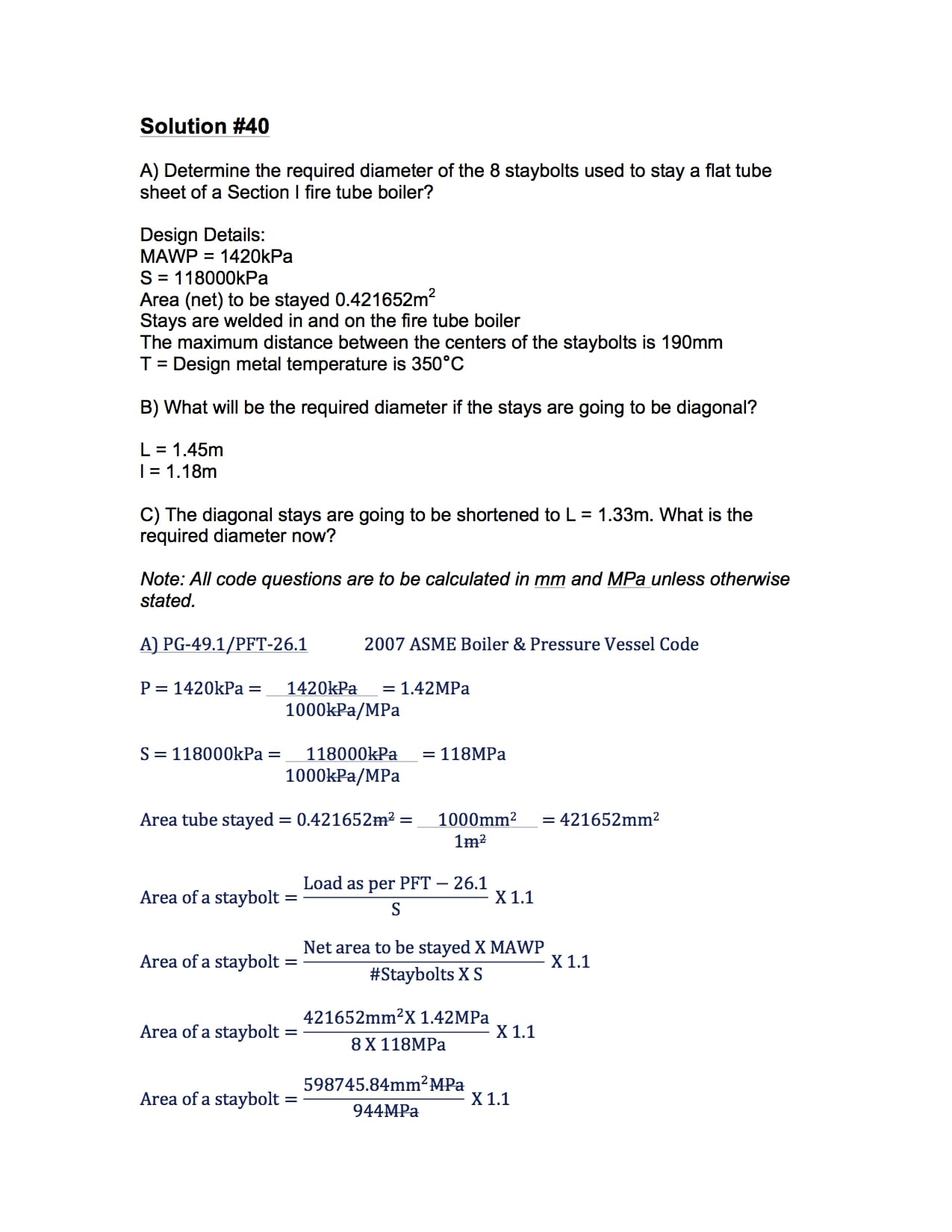
Area Stays Staybolts PG-49.1

Area Stays or Staybolts PFT-26.1 Requirements Included

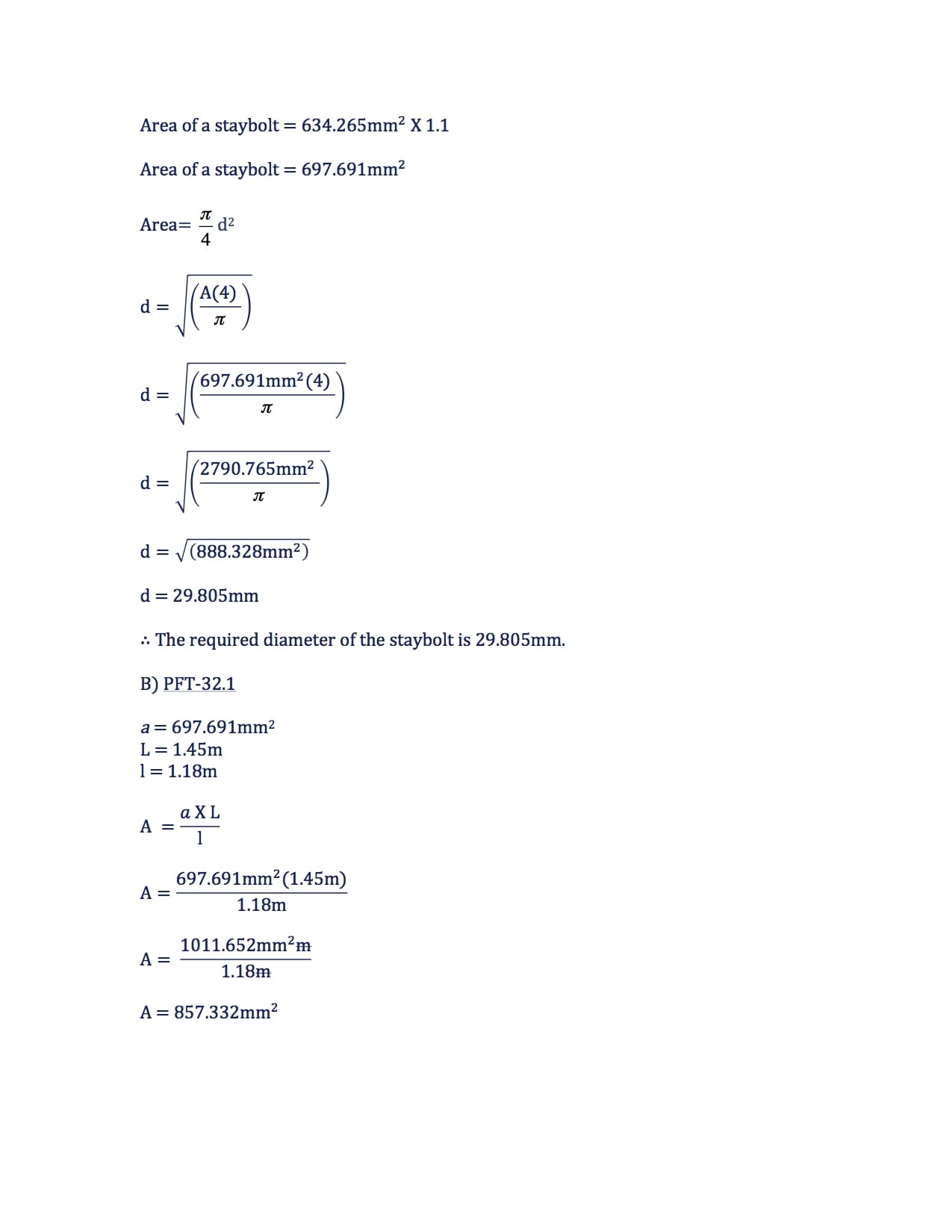
PFT-32.1 Stresses In Diagonal Stays

PG-46.1 Stayed Surfaces MAWP

Area Of Circle Using Diameter
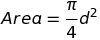
Page 7 Academic Supplement

The above transposed formula to determine the diameter from the area of a circle is not provided in your Academic Supplement
Area Of Circle Using Radius

Page 7 Academic Supplement

The above transposed formula to determine the radius from the area of a circle is not provided in your Academic Supplement
Formula Variables
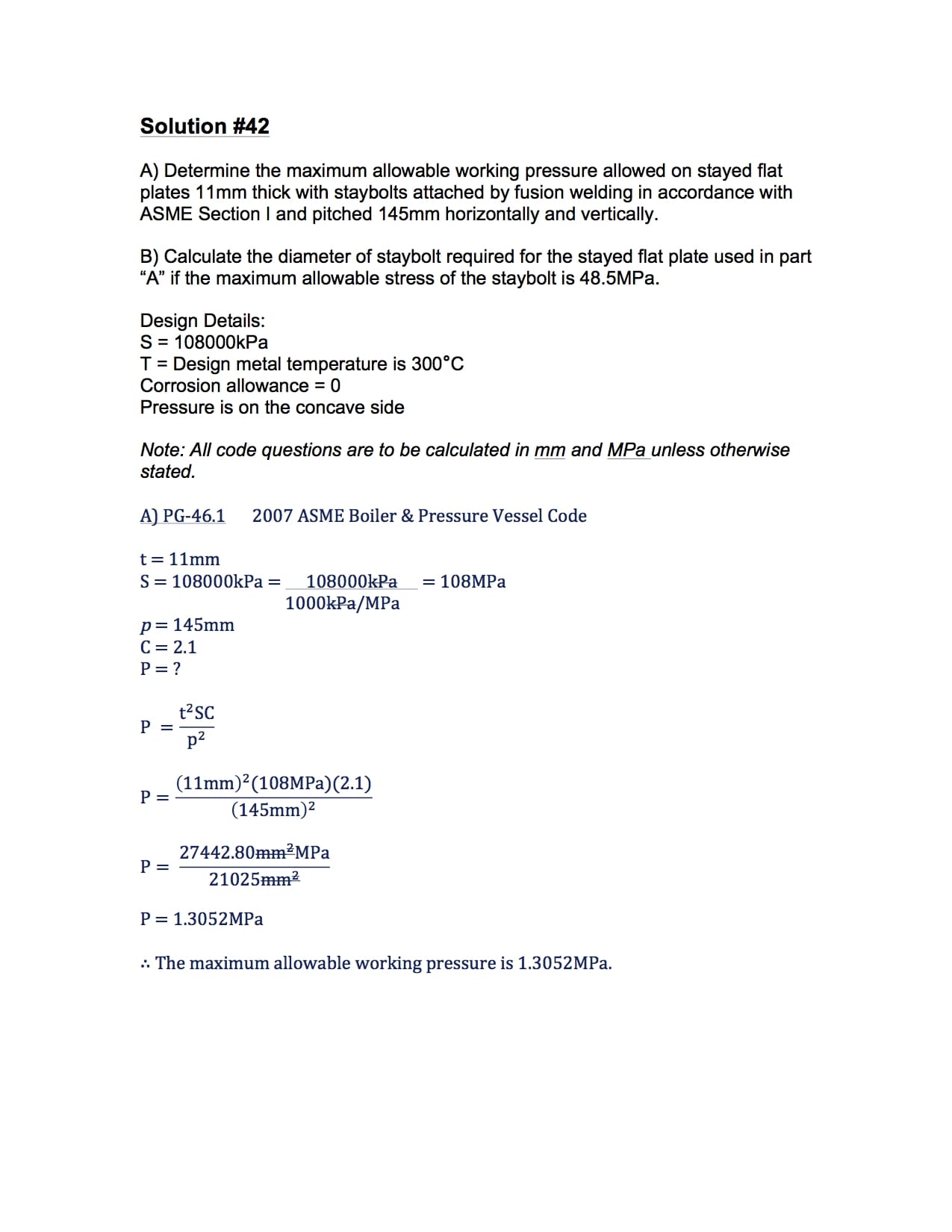
Area Stays or Staybolts PFT-26.1 Requirements Included
The variables used in the formula provided above are defined in PFT-26.1 on page 97
Net Area = Total area of stays or staybolts
MAWP = Maximum allowable working pressure
Staybolts = Number of stays or staybolts
S = Maximum allowable stress value given in Table 1A of Section II, Part D, psi (MPa)
PFT-32.1 Stresses In Diagonal Stays
The variables used in the formula provided above are defined in PFT-32.1 on page 100
A = Sectional area of diagonal stay
a = Sectional area of direct stay
L = Length of diagonal stay as indicated in Fig. PFT-32
l = Length of the line drawn at right angles to boiler head or surface supported to center of palm of diagonal stay, as indicated in Fig. PFT-32, in. (mm)
PG-46.1 Stayed Surfaces MAWP
The variables used in the formula provided above are defined in PG-46.1 on page 26/27
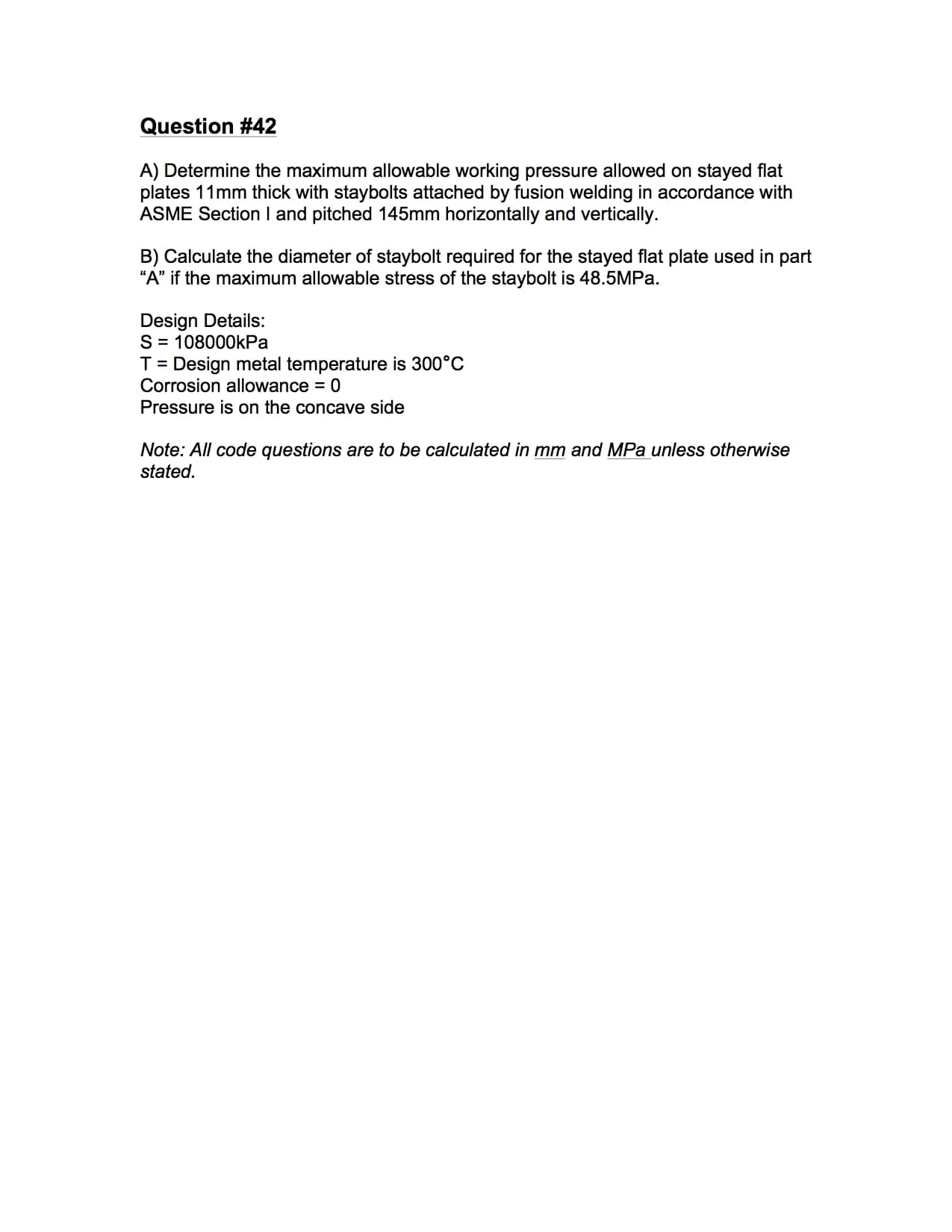
C = 2.1 for welded stays or stays screwed through plates not over 7/16 in. (11mm) in thickness with ends riveted over
= 2.2 for welded stays or stays screwed through plates over 7/16 in. (11mm) in thickness with ends riveted over
= 2.5 for stays screwed through plates and fitted with single nuts outside of plate, or with inside and outside nuts, omitting washers
= 2.8 for stays with heads not less than 1.3 times the diameter of the stays screwed through plates or made a taper fit and having the heads formed on the stay before installing them, and not riveted over, said heads being made to have a true bearing on the plate
= 3.2 for stays fitted with inside and outside nuts and outside washers where the diameter of washers is not less than 0.4p and thickness is not less than t
P = Maximum allowable working pressure, psi (MPa)
p = Maximum pitch measured between straight lines passing through the centres of the staybolts in the different rows, which lines may be horizontal and vertical, or radial and circumferential, in (mm)
S = Maximum allowable stress value given in Table 1A of Section II, Part D, psi (MPa)
t = Minimum thickness of plate, in. (mm)
Area Of Circle Using Diameter
The above formula can be found in page 7 of your Academic Supplement, the variable definitions are not provided.
Area = Area of circle
Pi Symbol = 3.141592654
d = Circle diameter
Area Of Circle Using Radius
The above formula can be found in page 7 of your Academic Supplement, the variable definitions are not provided.
A = Area of a circle
Pi Symbol = 3.141592654
r = Circle radius
[table id=1 /]
How To: Complete Stays And Staybolt Questions
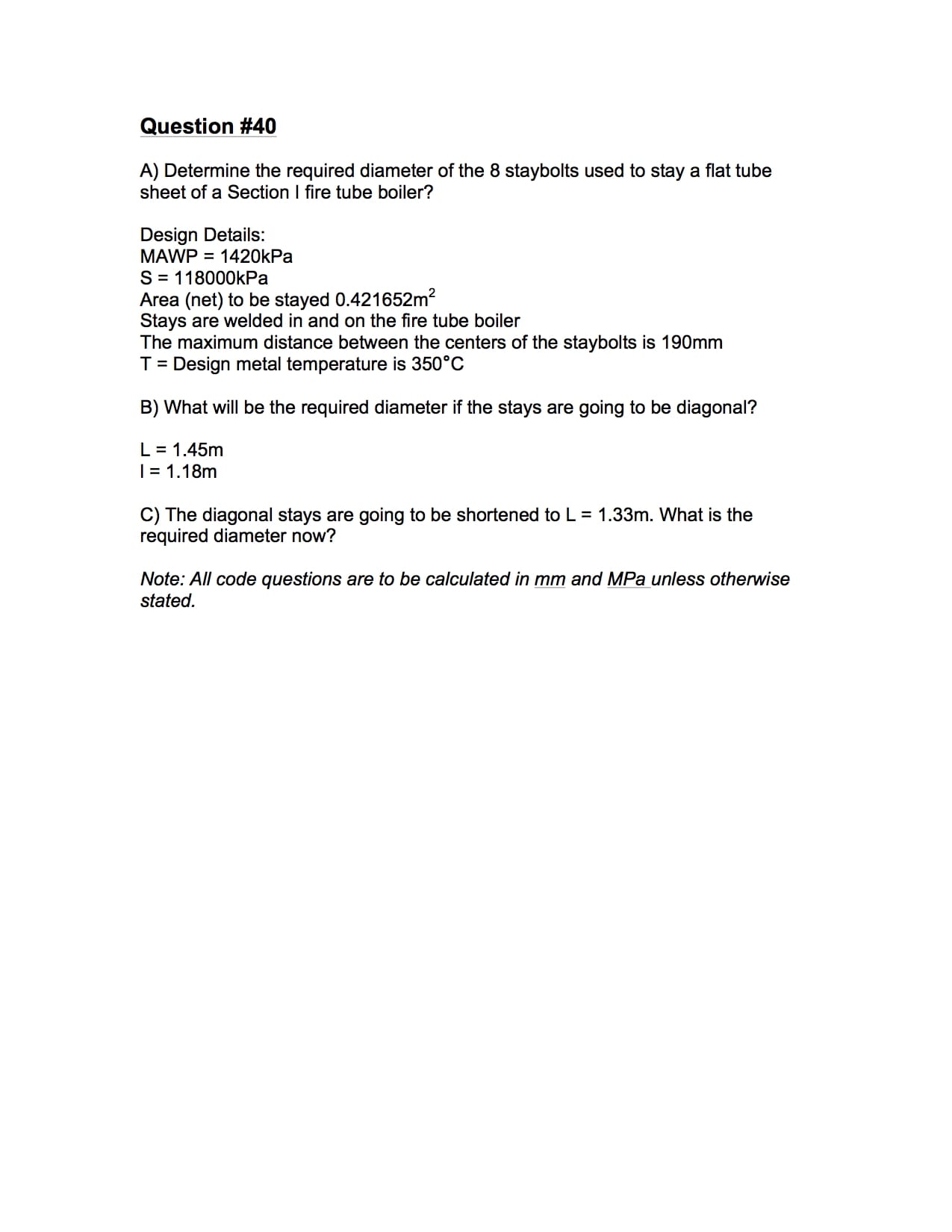
Note: All code questions are to be calculated in (mm) and (MPa) unless otherwise stated. Convert accordingly and properly before the calculation.
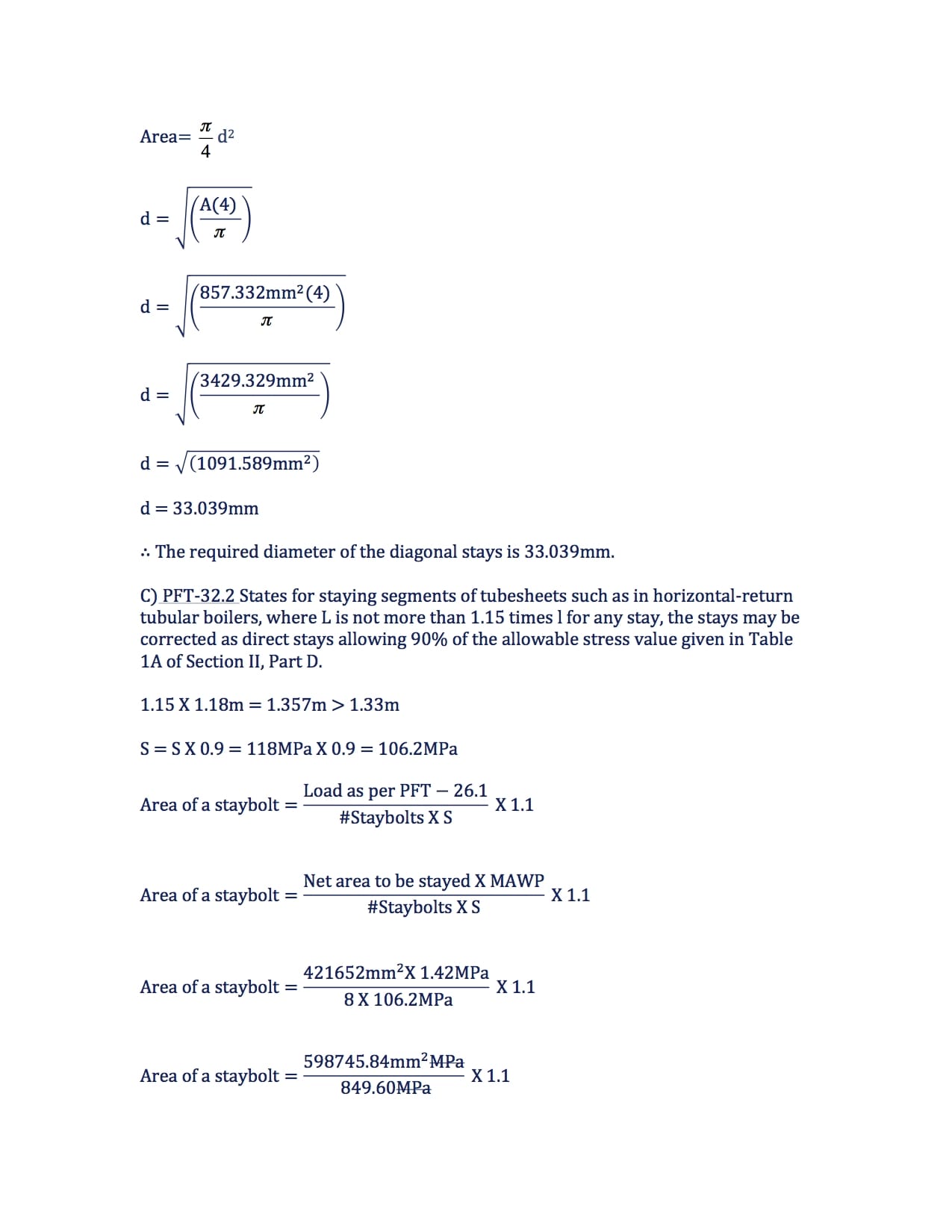
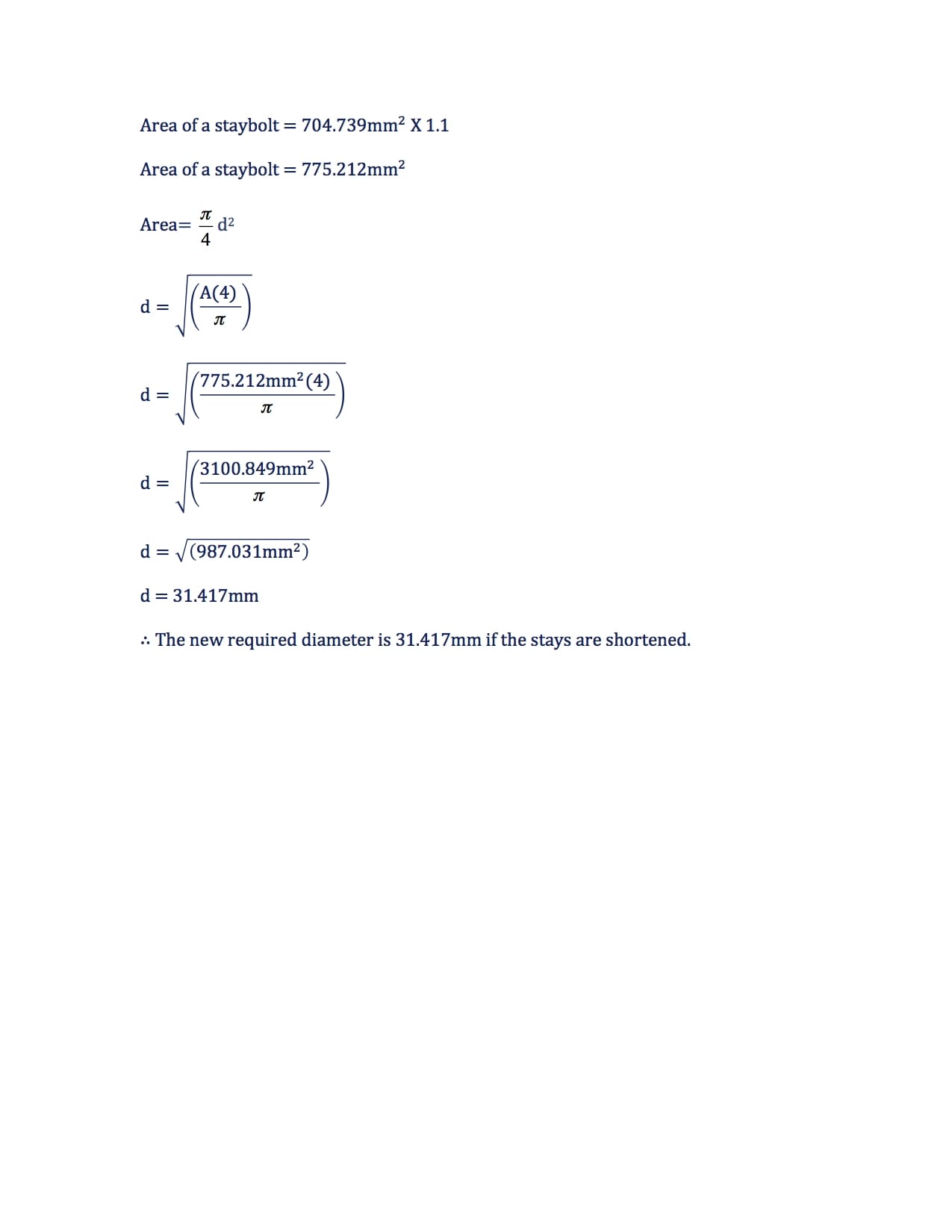
Question #40
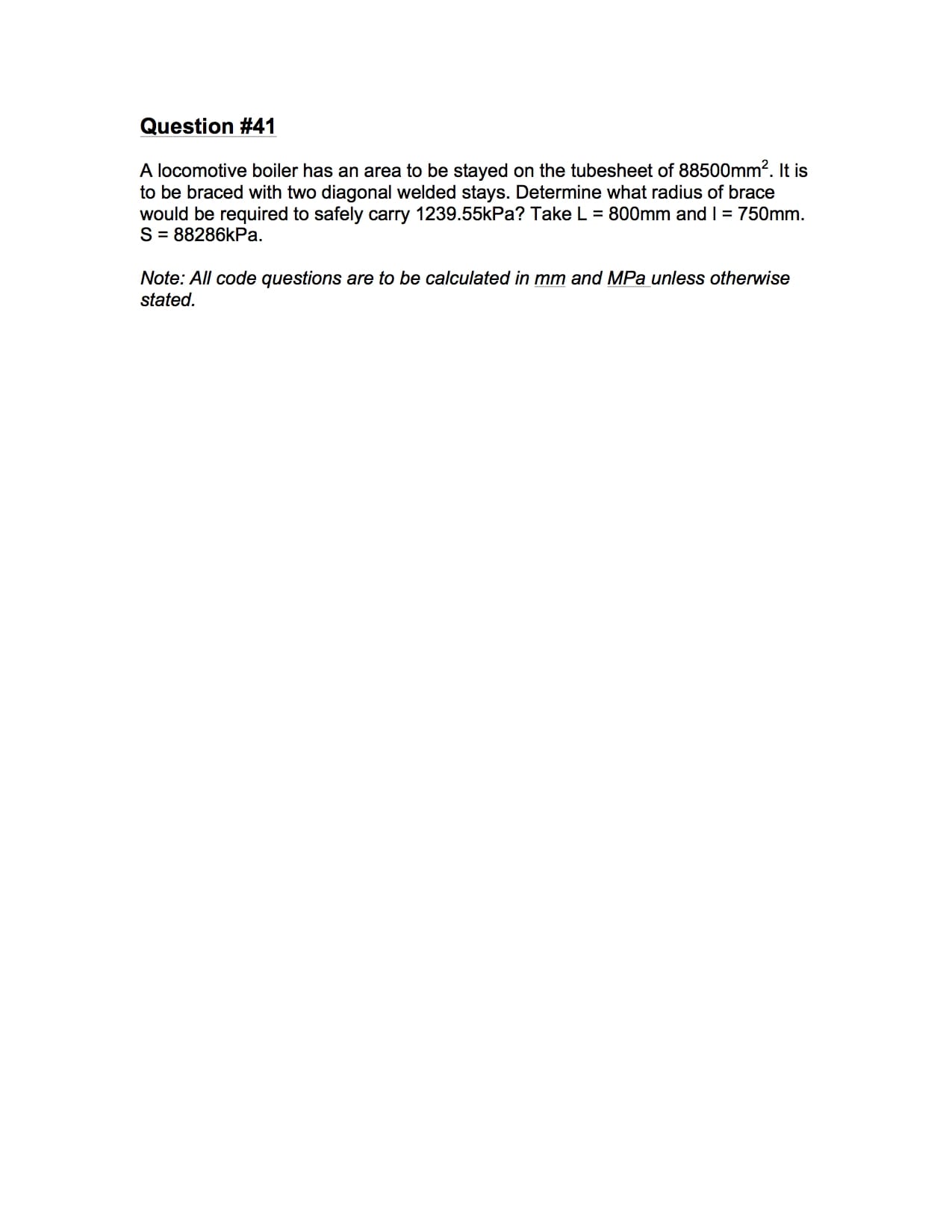
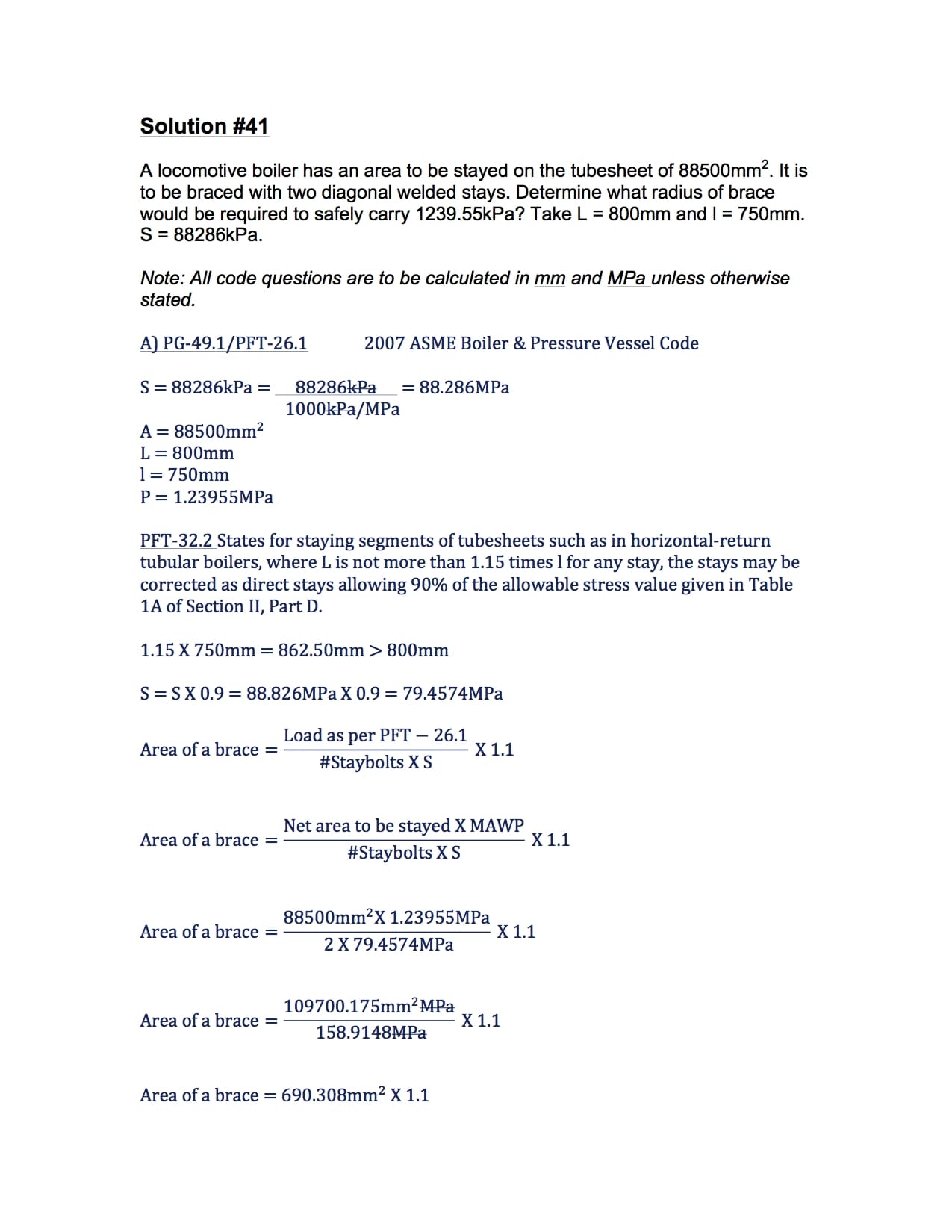
Question #41
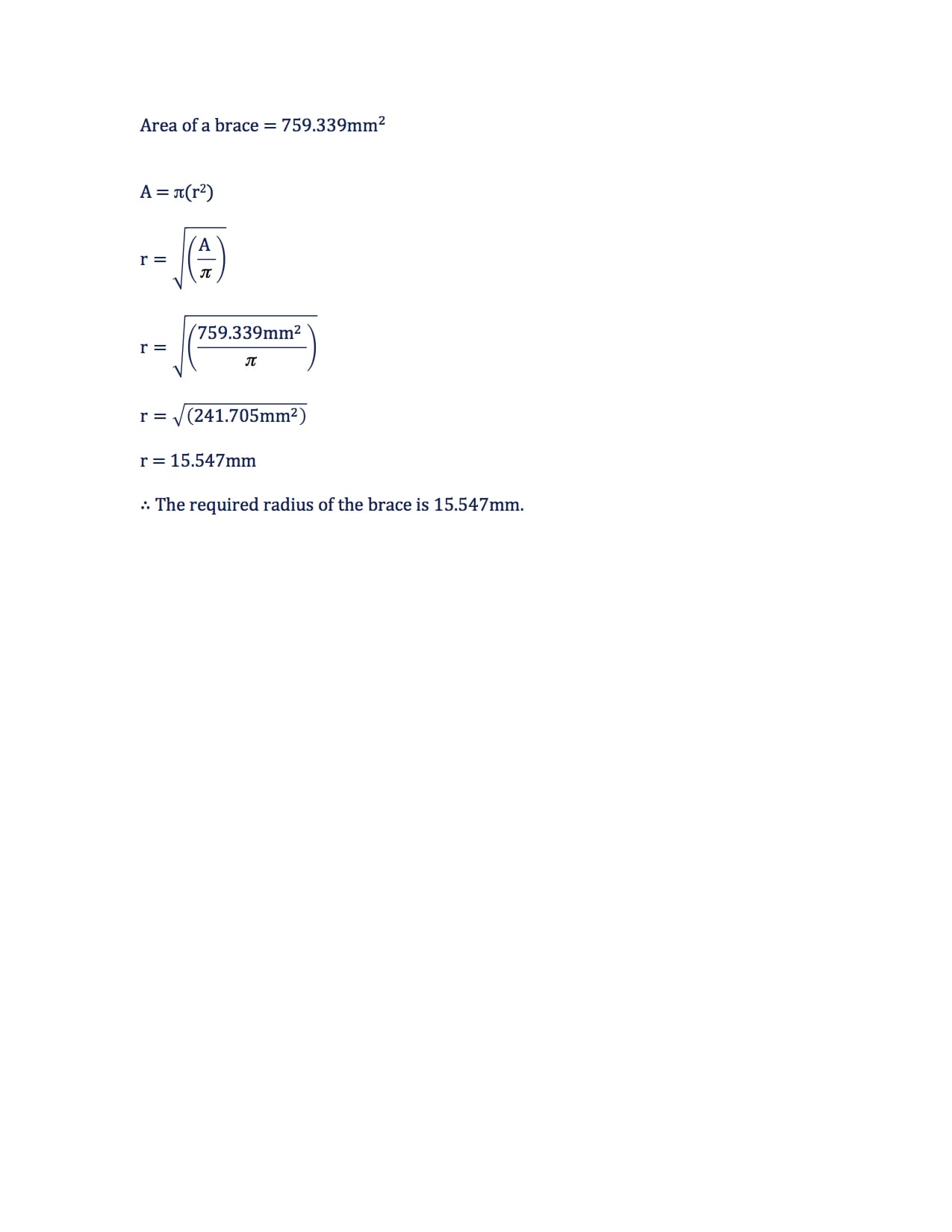
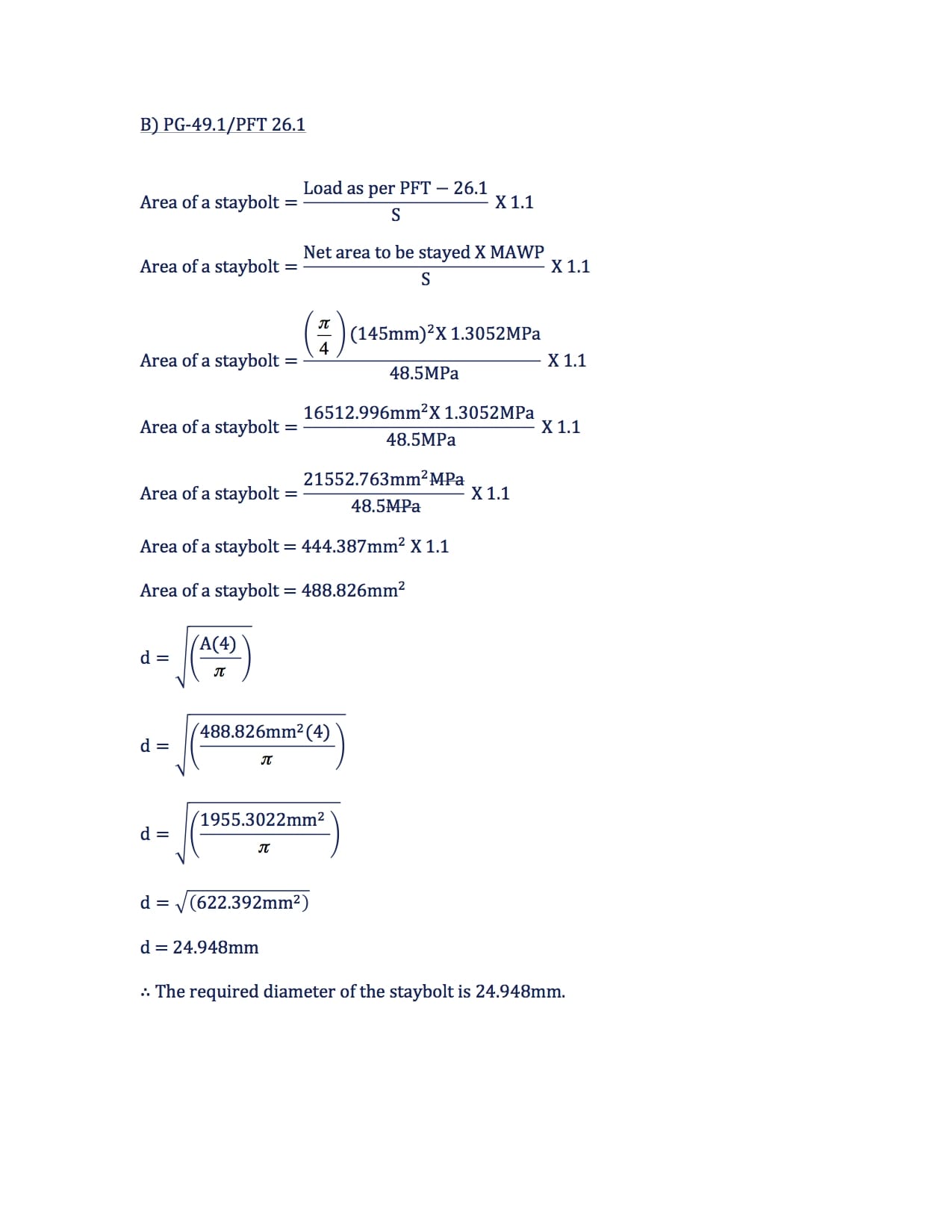
Question #42
SUMMARY: How To: Complete Stays And Staybolt Questions
Did the examples provided helped you understand How To: Complete Stays And Staybolt Questions?
Have you followed Power Engineering 101 on Facebook or Twitter?
Have a great weekend.
Power Engineering 101